Critical Space
We propose a “resource-driven living environment.” Critical Raw Materials (CRMs) are essential for the construction of our modern living environment. Spatial planning must therefore prepare for possible disruptions in supply chains. The use of CRMs must become one of the criteria on which spatial planning decisions are based, not only on strategic grounds, but also because of ecological and ethical consequences.
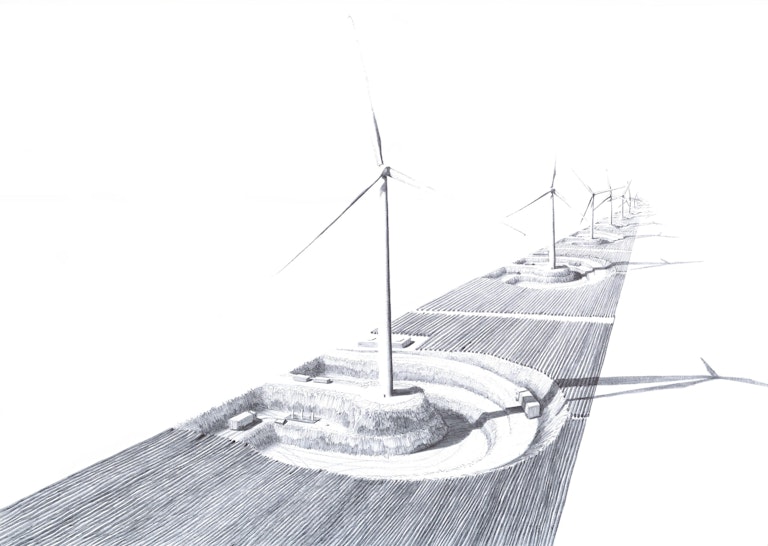
In Europe, there is little mining for critical raw materials such as neodymium, dysprosium, and cobalt, which are essential for the production of wind turbines. These raw materials are primarily imported from countries such as China, Congo, and Australia. Although Europe is working on initiatives to reduce this dependency, importing these raw materials remains necessary for the energy transition.
However, the extraction of these raw materials has significant environmental and social impacts in the countries where mining takes place. Mining can lead to deforestation, water pollution, and land rights conflicts. This illustration shows how much rock must be moved, crushed, and screened to obtain the materials needed to build a single wind turbine.
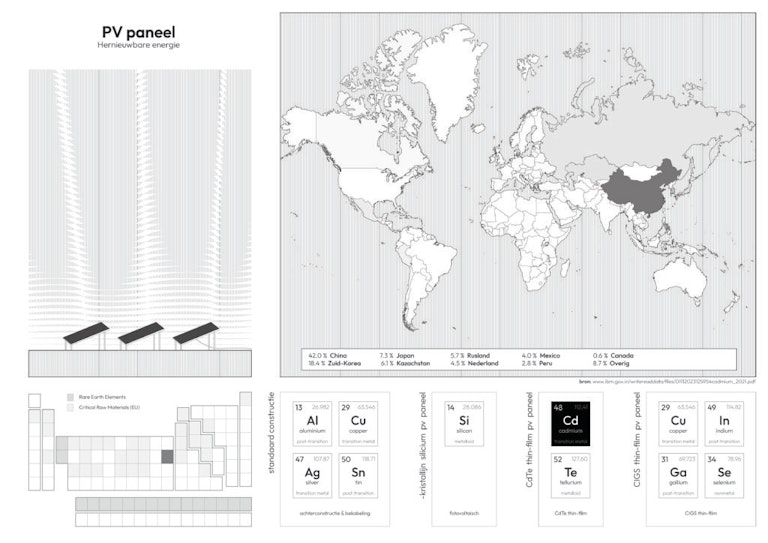
Different types of solar panels use different critical raw materials to convert solar energy into electricity. These critical raw materials are primarily mined outside of Europe.
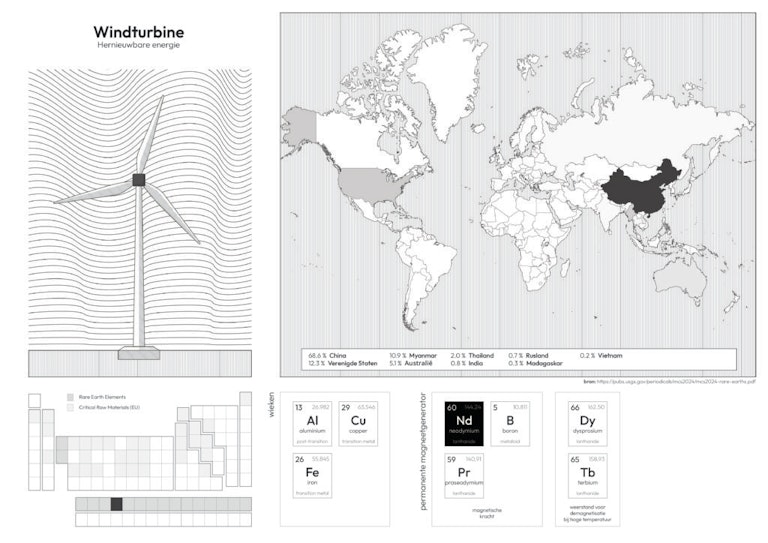
To achieve the Dutch climate goals for 2050, 15% of current global neodymium production would need to be transported to the Netherlands. This is despite the fact that the Netherlands represents approximately 0.74% of global GDP. Neodymium is used, among other things, in permanent magnet generators in wind turbines (to convert motion into electricity).
Data from: Metabolic et al. (2021). Een Circulaire Energietransitie.
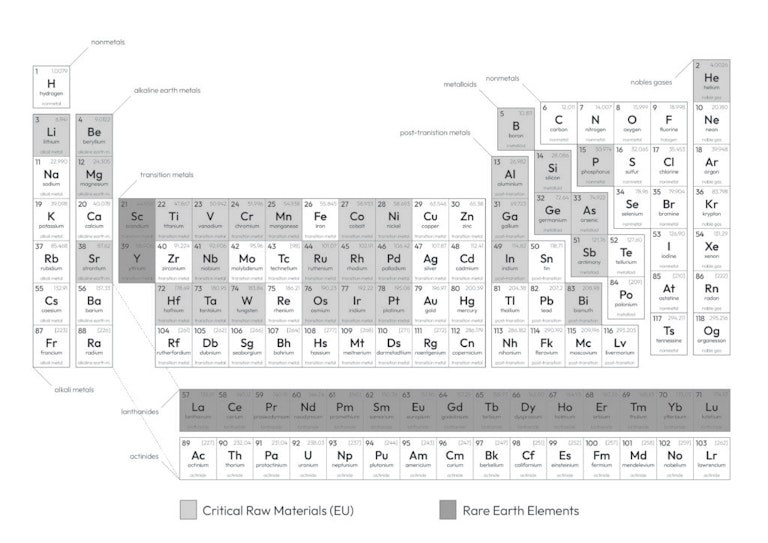
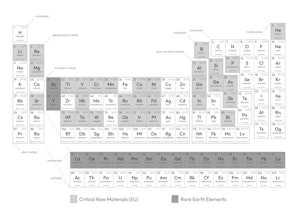
The raw materials needed for our digitalization and energy transition can be defined in various ways: chemically, scientifically, and strategically.
Chemical: determined by the properties of the raw materials;
Critical: determined by the economic importance and the risk of disruption to supply chains;
Strategically: determined by political decision-making regarding crucial industries.
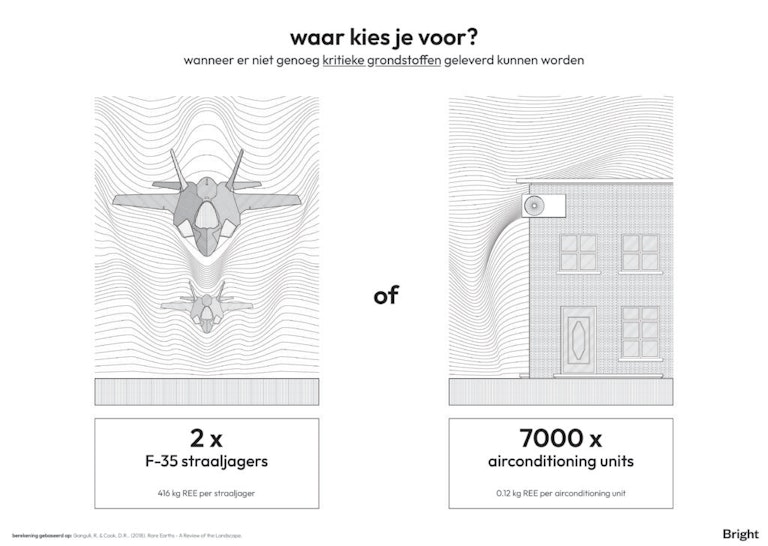
Two F-35 fighter jets contain as many critical resources as 7,000 air conditioning units.
Critical Raw Materials
Digitalisation, sustainable mobility and the energy transition not only require a lot of space, but also a lot of critical raw materials. In these technological transitions, 34 different CRMs are distinguished: neodymium, for example, is used for the magnet generators in wind turbines, yttrium for displays in smart homes, and graphite for battery storage.
Where do Critical Raw Materials come from?
These CRMs are mainly mined far outside Europe, making us dependent on countries such as Kazakhstan, Turkey, Congo, and especially China. The mining required for our renewable energy is transforming local landscapes into polluting extraction areas. Raw materials are then shipped via complex global supply chains, transformed into semi-finished products and technical components, and ultimately end up with us in the form of solar panels, electric cars, and computers. To reduce our dependence, Europe is pushing for a European raw materials industry in which the Netherlands must also play a role.
The use of CRMs must become one of the criteria on which spatial planning decisions are based.
What if?
These raw materials are critical because supply chains are relatively susceptible to disruption, and because disruption can have major economic consequences. Geopolitically, disruption can also lead to power shifts and regional tensions in resource-rich areas. We cannot therefore assume that solar panels or electric cars will always be available to enable our transitions. CRMs therefore have enormous ecological and geopolitical dimensions.
A Resource-Driven Living Environment
A resource-driven living environment has an impact on every scale. In terms of spatial planning, the spatial consequences of a European raw materials industry must be considered. Both logistical material flows and new factories for separating CRMs will take place spatially. Regional strategies must take into account geopolitical scenarios that could disrupt the supply chains of CRMs. In urban development, the availability of CRMs will determine mobility, Smart City concepts and energy infrastructure. And in product design, alternatives are needed for crucial technologies that minimise the use of CRMs and encourage recycling.
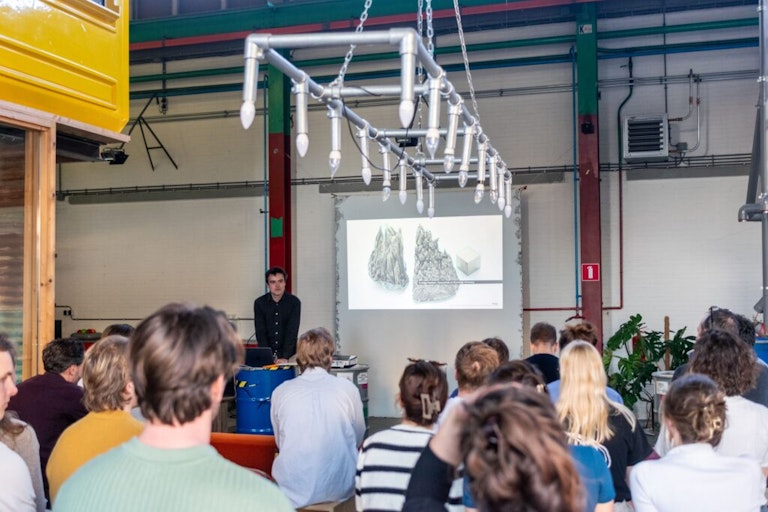
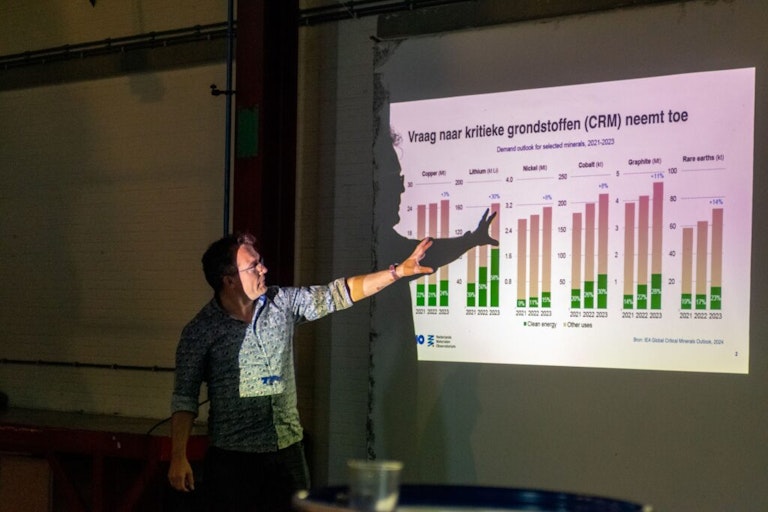

 Circular working landscapes of the future