Passive Housing, From Building to Neighborhood
Climate change, netcongestion and biobased
As the effects of climate change are becoming increasingly noticeable in the Netherlands, this is a good moment to renew our attention to energy-conscious building. In addition to building services engineering, a field that is developing at a rapid pace, urban and architectural design can also contribute to more future-proof buildings. Buildings that are sustainable and remain comfortable and livable as temperatures rise, without requiring excessive amounts of energy. To achieve this, we can learn from exemplary buildings from other places and other periods. The best examples require no energy after construction. Ideally, they also provide functional and aesthetic value in addition to their contribution to the indoor climate.
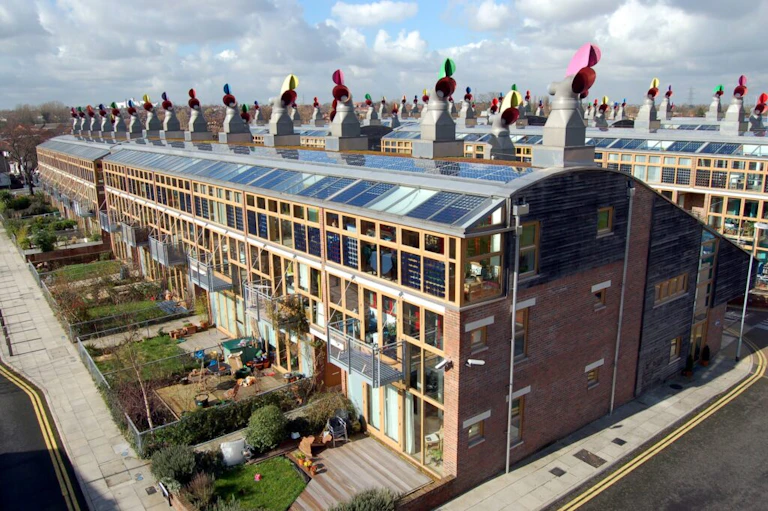
Buildings suited for their surroundings
Architecture and climate have historically been closely linked. In the 1960s, Bernard Rudofsky collected examples from around the world of what he called “vernacular architecture”: buildings that are adapted to a specific location. His book and the eponymous exhibition at the Museum of Modern Art, Architecture Without Architects, showcase buildings constructed from local materials, raised on stilts in flood-prone areas, equipped with large overhangs to protect vulnerable façades from rain, and covered with densely vegetated roofs in regions with cold winters. There are also numerous traditional cooling techniques: the heavy earthen buildings of Marrakech, the whitewashed houses of Santorini, badgirs or wind catchers that can reduce indoor temperatures in Pakistan by as much as 15 degrees Celsius, toldo-covered streets in Seville, and colonnades that provide shade in almost every small town across Southern Europe. This architecture is timeless: in many of these places, similar building methods have likely been used for thousands of years. In a sense, this architecture is also “energy-free”: all of these are examples of passive techniques, measures that regulate the indoor climate themselves whenever necessary.
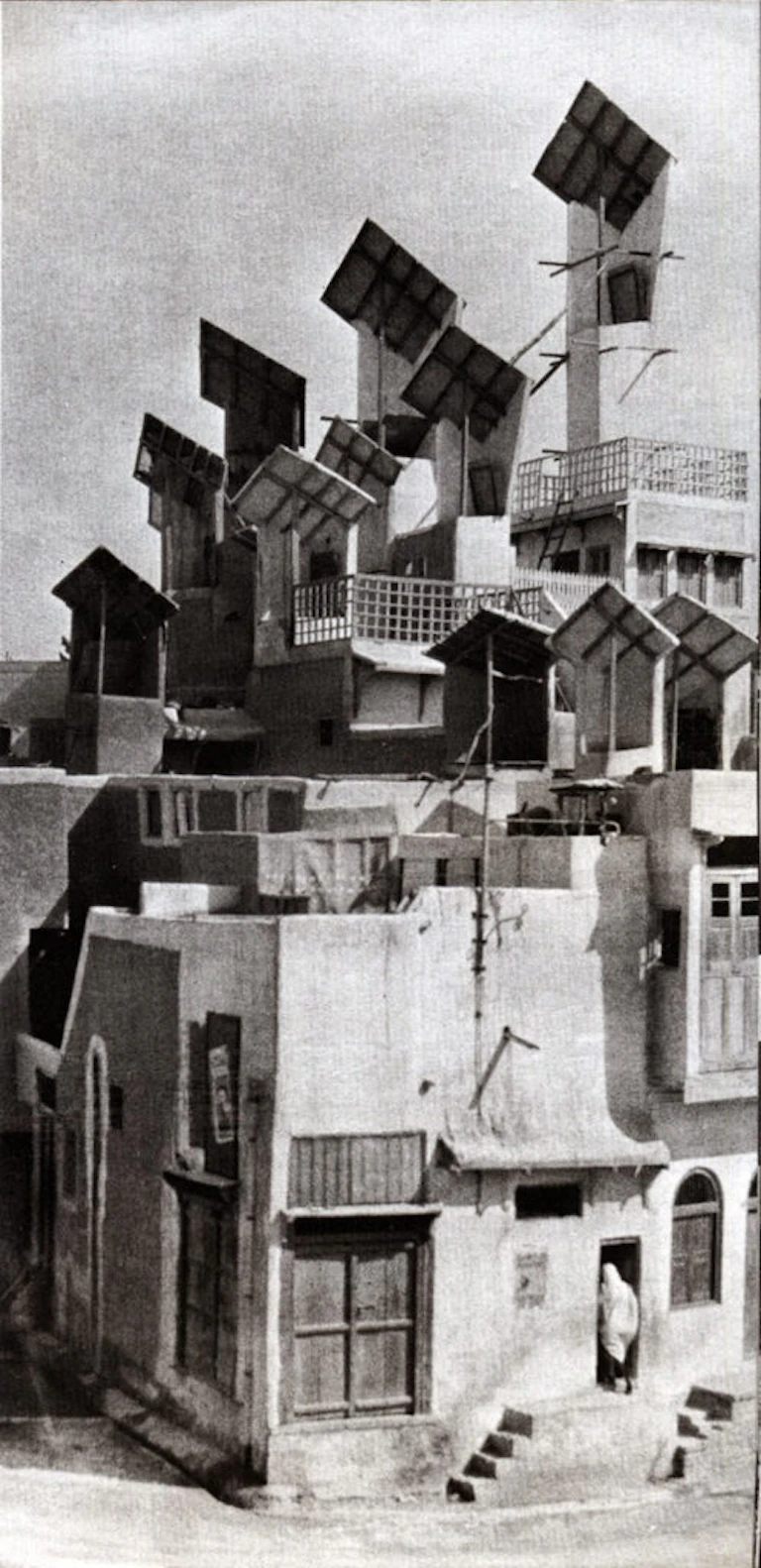
No protheses!
During the second oil crisis of 1979–80, attention once again turned to “energy-conscious building.” The German architect Oswald Mathias Ungers presented his Eco-Solar Houses, heated by passive solar energy and explicitly intended to support a sustainable and fulfilling way of life. Ungers sought solutions in architecture itself: in the spatial design of housing. Technologies such as heat pumps were dismissively described by him as “prostheses.” Instead, he looked to historical precedents. One of his proposals was a glass enclosure inspired by traditional verandas: a second skin surrounding the house, planted as a buffer zone to moderate temperature differences between indoors and outdoors. During the transitional seasons, this space also provides an additional and pleasant living area.
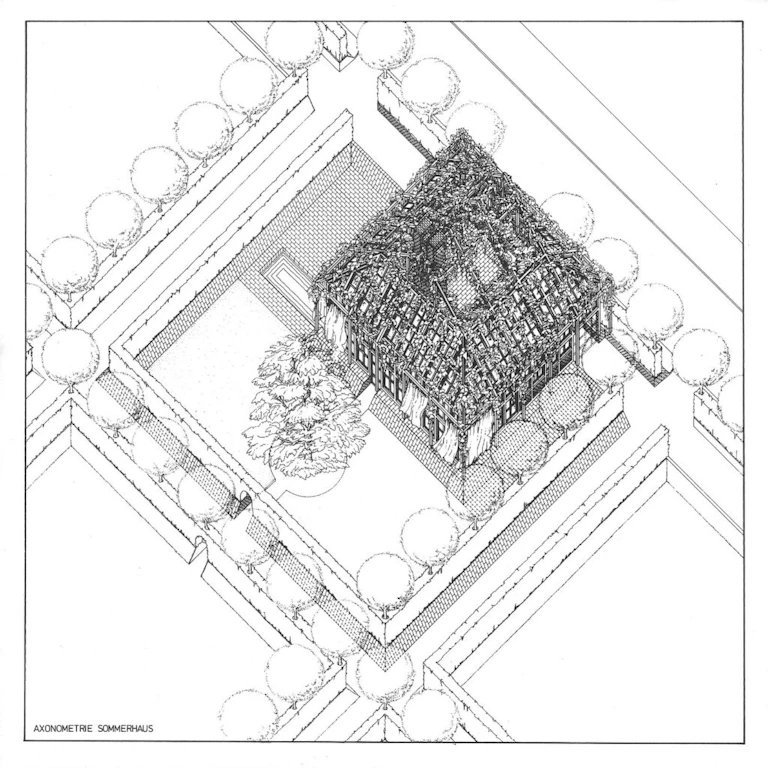
On neighborhood scale
Solutions for passive solar heating and cooling are often focused on individual buildings. But what happens when this principle is scaled up to the level of an entire neighborhood? As early as the 1970s, Ralph Knowles, a professor at the USC School of Architecture, explored this question. He developed the concept of the solar envelope: a method that seeks to balance building density with access to sunlight. The solar envelope consists of imaginary boundaries around a building, derived from the movement of the sun. Buildings can be designed within these boundaries so that they do not cast shadows on one another during critical periods and so that optimal solar access can be achieved at the neighborhood scale.