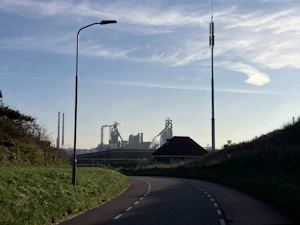
Rhythms and bandwidths
Design-based research into a climate-neutral, circular, and healthy future for the industrial cluster in the North Sea Canal Area
The development of the North Sea Canal area has its origins at the end of the nineteenth century. The city of Amsterdam took the initiative to dig a direct connection to the sea. The goal was to give a boost to Amsterdam’s lagging industrialization and to make the city accessible once again to the largest seagoing vessels. The development of the steel cluster around Hoogovens, now Tata, in IJmuiden is one of the industrial developments that subsequently took root in the area.
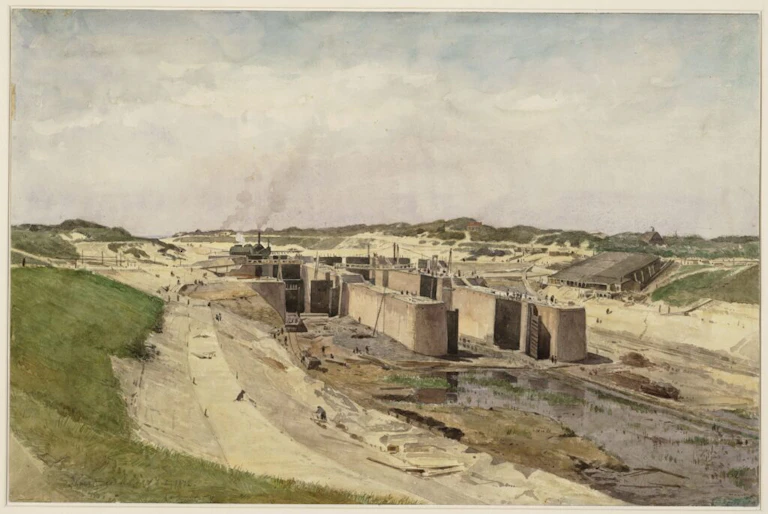
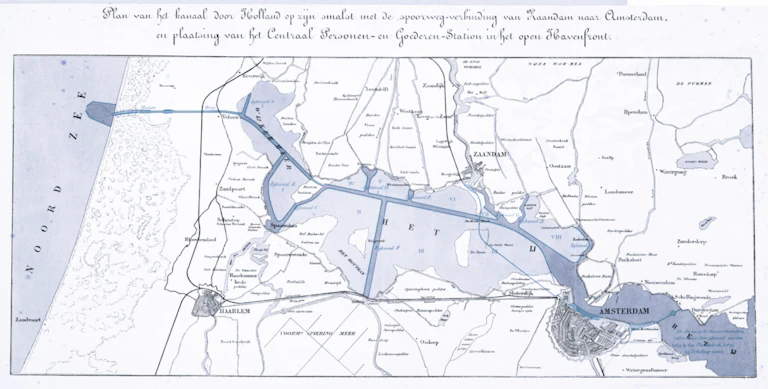
Site-specific Talents
The local talents, the conditions for establishing a business, have been decisive for the success of the steel cluster: direct supply of coal and ore by sea, a reliable shipping connection to the industrial hinterland in the Netherlands and Germany, a high location in the dunes, fresh water from the dune area, and a high-quality living environment for the employees. However, these talents are under pressure, partly due to the actions of the steel cluster itself. As a result, the future of the steel cluster is highly uncertain.
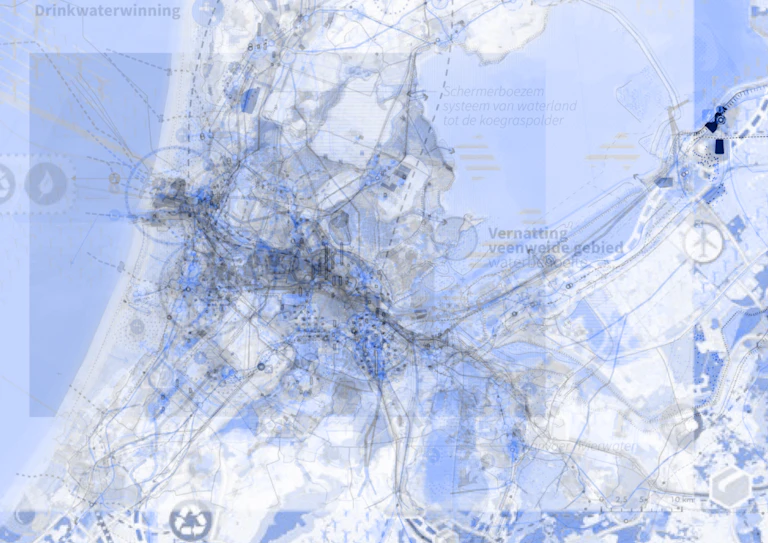
Now, Soon, and Later
The question underlying this design exploration is: what is a possible future for the steel cluster in the North Sea Canal area? To answer this question, trends and developments from the present towards 2100 were examined. Up to 2050, the plans and ambitions are clear; after 2050, it is the ranges of possible effects of climate change, population growth, etc., that still offer some guidance. Rise sea levels, increased fluctuations in river water levels, and salinization of the area are the defining conditions for the region.
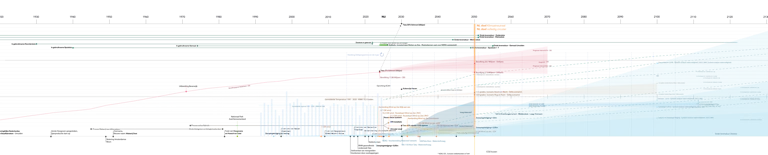
Insights from the different scenarios
To provide insight into possible futures for the industry throughout the North Sea Canal area, four scenarios have been developed and visualized. The scenarios are based on current trends and developments on the one hand, and future uncertainties on the other. The underlying axis takes the water system (saline maritime connection or fresh inland water) and the preservation or renewal of the industry as its starting point. Each of the four scenarios focuses on a different certainty: steel, energy, port, and (fresh) water. Each scenario is structured using a timeline. Furthermore, the key assumptions and choices to be made are identified for each scenario.
The four scenarios show which talents of the location must be cherished, cultivated, or discovered in the future, as well as which talents may have become obsolete.
1. Freshwater availability and the strategic coastal location remain of great importance and must be safeguarded (by preventing salinization).
2. Offshore wind landings offer the security of energy supply, both now and in the future. However, the North Sea Canal Area will need to become less dependent on shipping connections to the sea (for the Western Port Area) and the industrial hinterland.
3. Connection to alternative multimodal or multicommodity networks offers future flexibility.
4. The leasehold structure of the Western Port Area is a talent that can be utilized to gradually provide space for a new industrial economy in the area. Additional space for transformation may be found outside the dikes with the development of an IJvlakte.
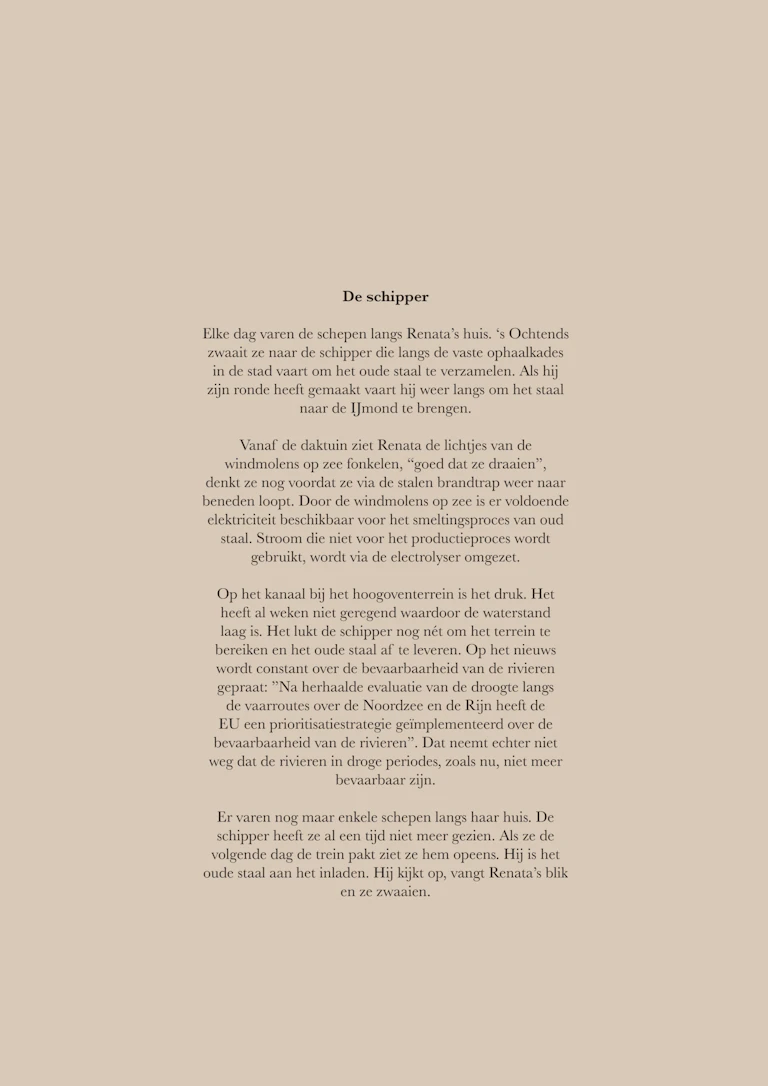
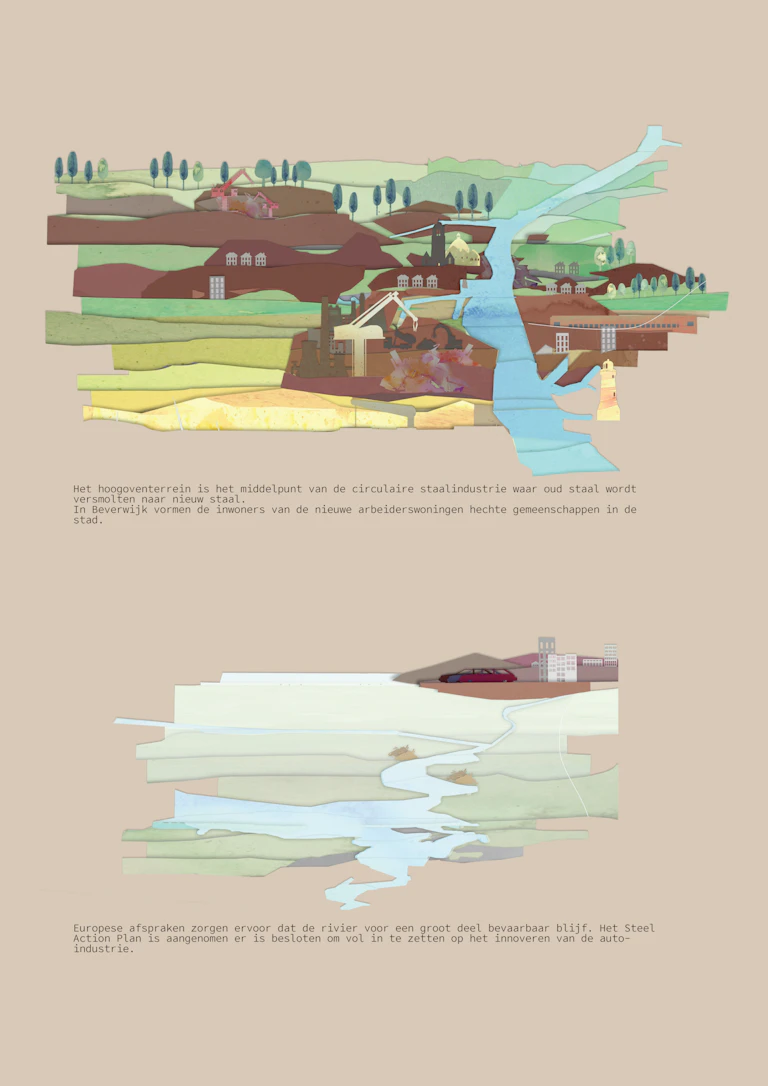
scenario: Staalzekerheid
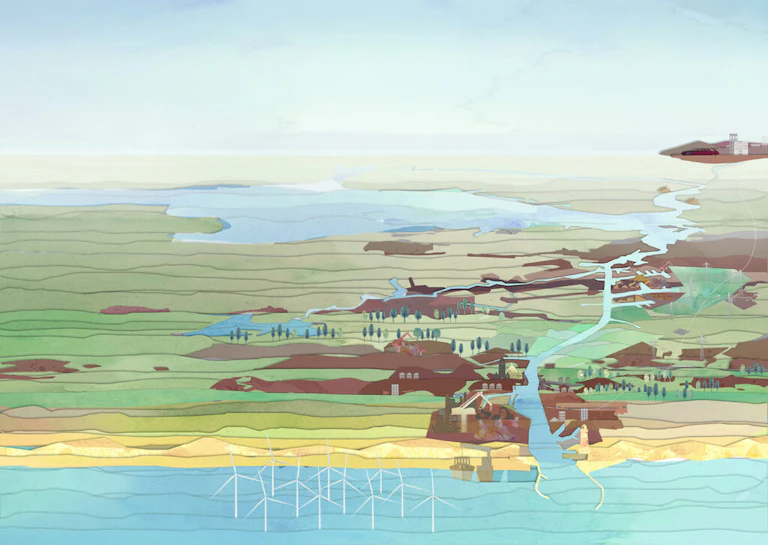
Starting points
Steering towards strategic autonomy of the steel industry
Connection with Northwest European industry
Transformation of blast furnaces to circular steel production
Utilizing offshore (wind) energy and green hydrogen
Choices
Steering towards strategic autonomy of the steel industry
Connection with Northwest European industry
Transformation of blast furnaces to circular steel production
Utilizing offshore (wind) energy and green hydrogen
scenario: Energiezekerheid
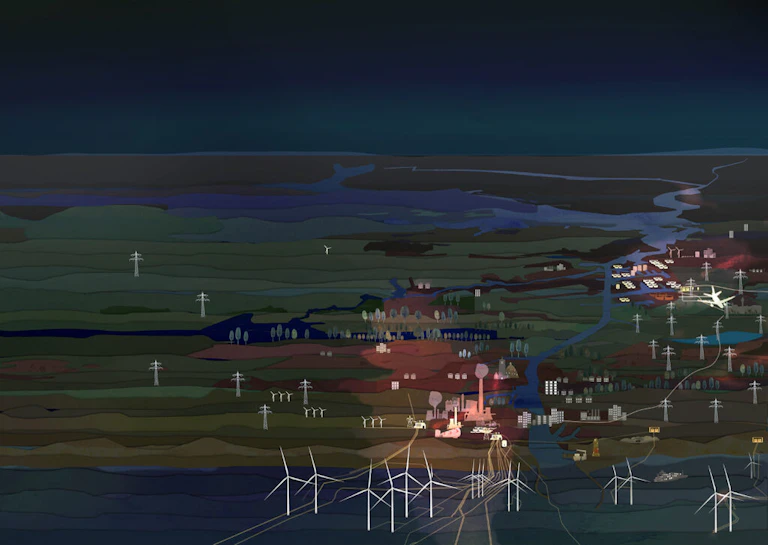
Guiding principles:
Steering the further development of an energy cluster
Connection with international and regional energy networks (e.g., Schiphol)
Choices:
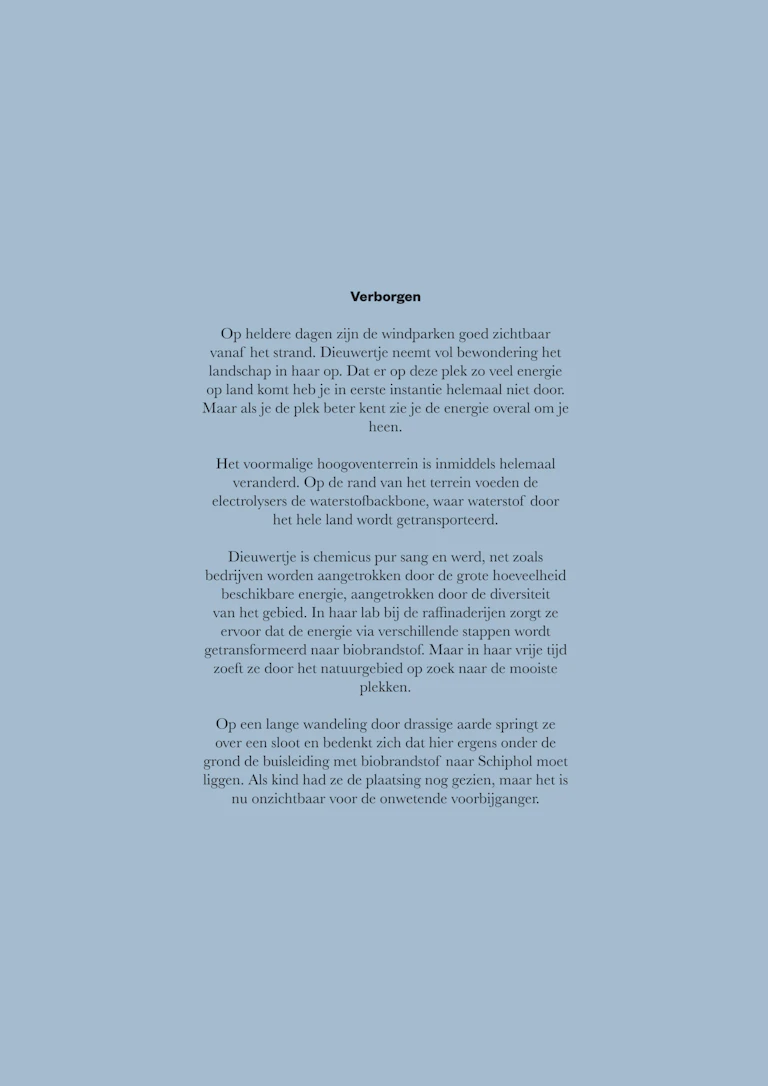
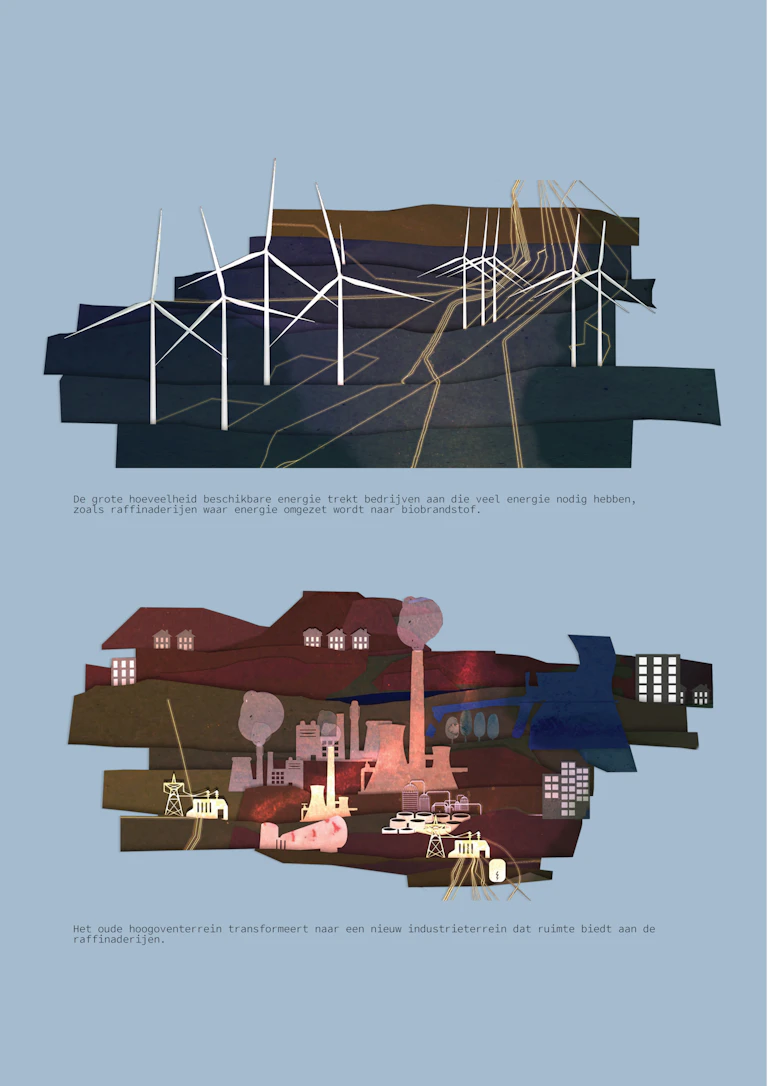
Using industrial space outside the locks for the production of green hydrogen and synthetic fuels.
Keeping the sea lock open for shipping for as long as possible, with later transshipment of fuel outside the lock
Connections (cables and pipes) with other industrial clusters for energy transport
Connection with Schiphol for the transport of Sustainable Aviation Fuel (SAF)
Western Port Area offers space for the storage of synthetic fuels and hydrogen
scenario: Havenzekerheid
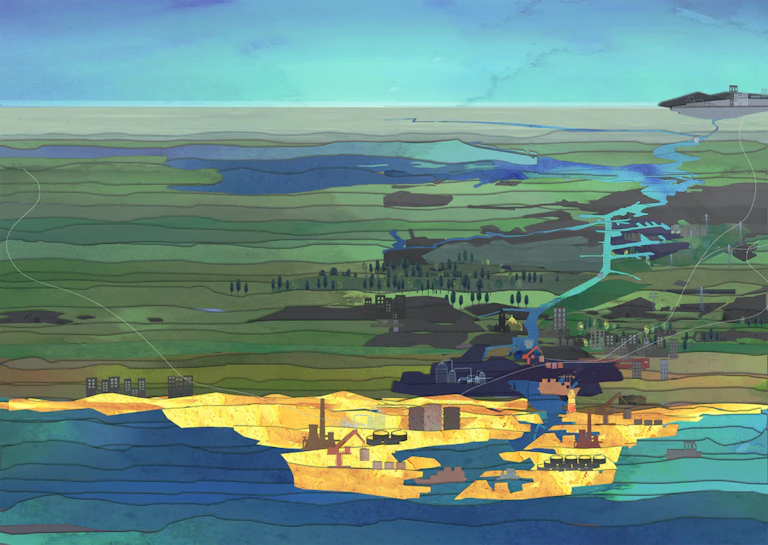
Guiding Principles
Focusing on retaining a seaport for the Amsterdam Metropolitan Area
Part of an international network of seaports
All existing industry (including the steel cluster) can be retained
Choices
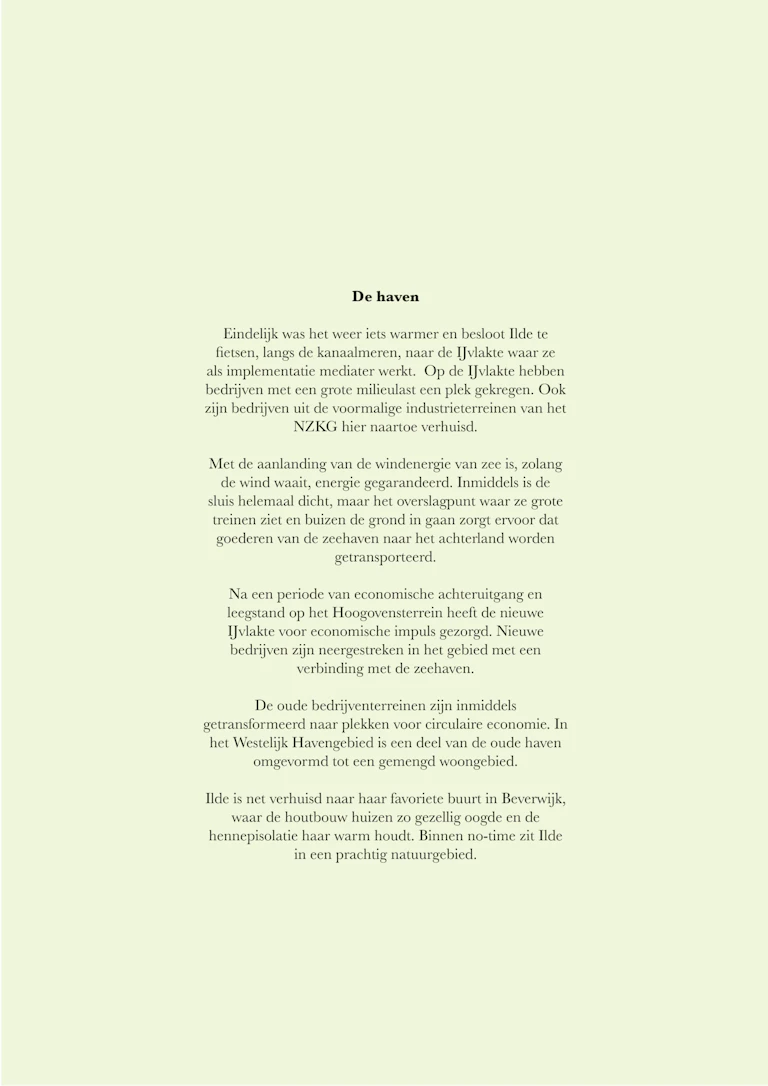
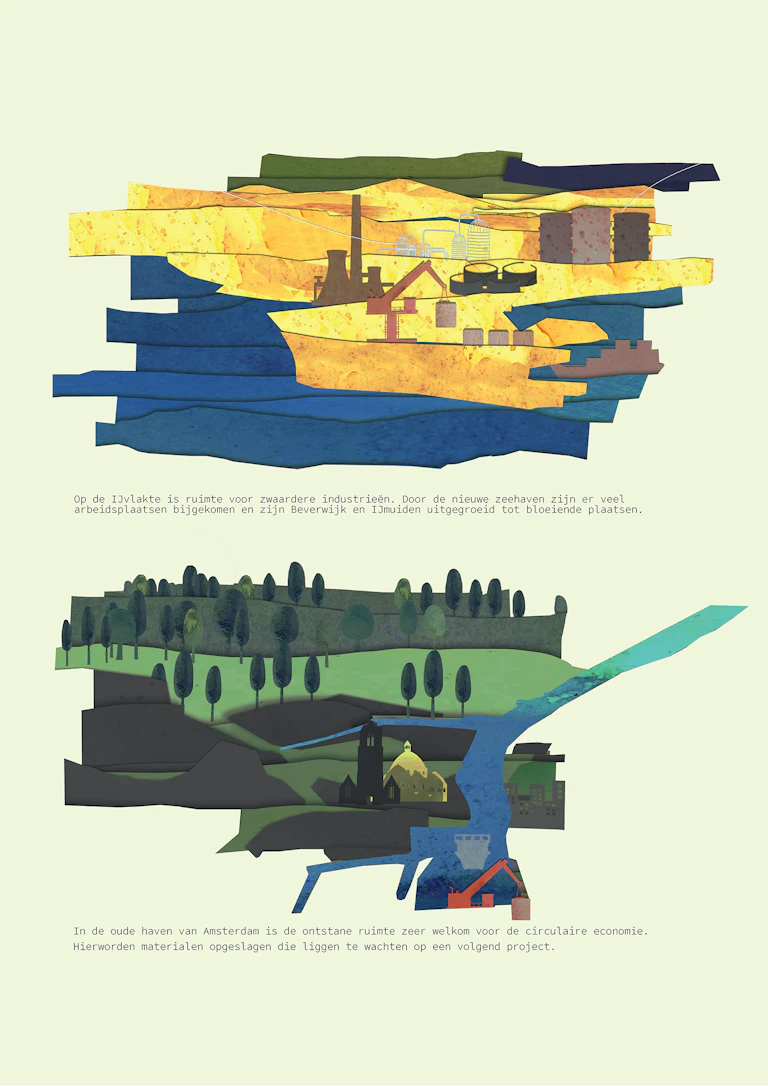
Strategic expansion of the port in front of the lock in conjunction with coastal defense: IJvlakte
Relocation of industry in the North Sea Canal area to IJvlakte
Eventual closure of Zeelsluis IJmuiden to shipping traffic
Developing a multimodal transshipment point in IJmuiden
Western Port Area offers space for an urban circular economy
scenario: Waterzekerheid
Guiding Principles
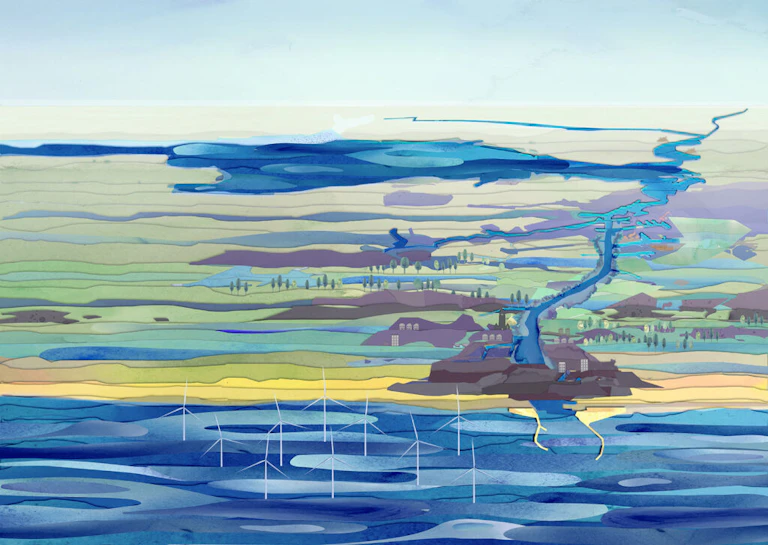
Managing sustained freshwater availability and combating salinization
Preparing for increasing unreliability of river navigability
Choices
Investing in measures against salinization
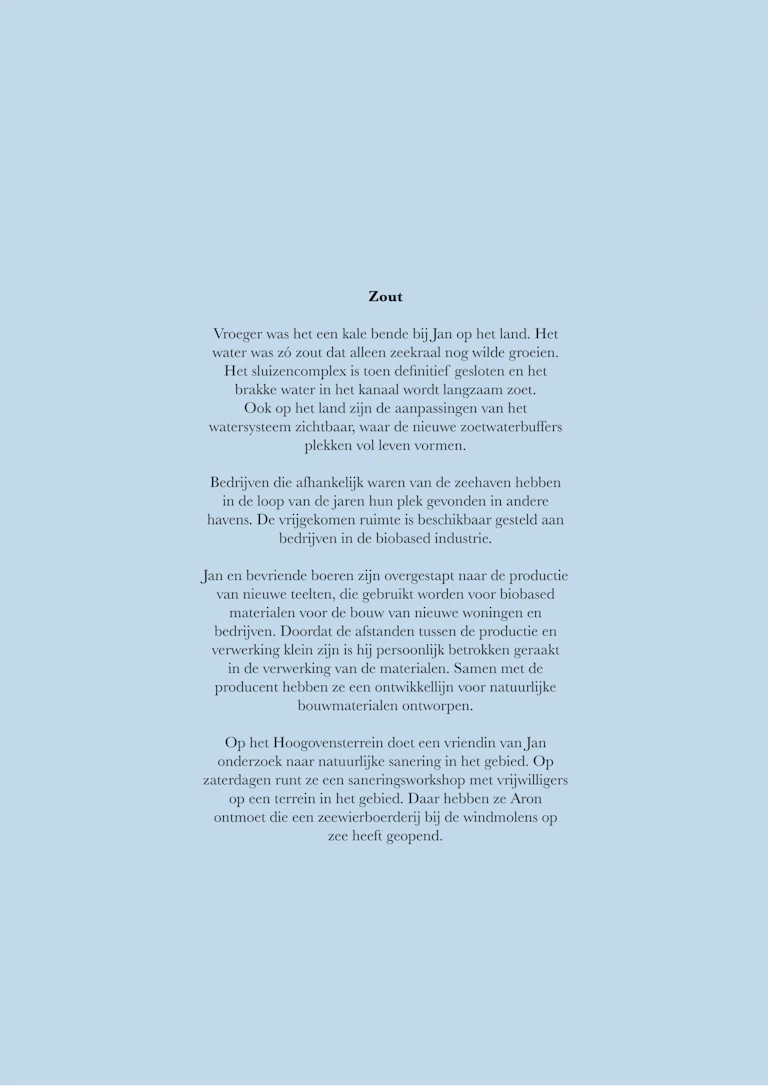
Production of biobased materials in the North Sea Canal Area and the North Sea
Closing the IJmuiden Sea Lock as soon as possible
Biorefinery facility at the site of the blast furnaces
Western Port Area offers space for biobased companies
Now, soon, and later: path dependencies in time
The long-term future of the industrial cluster in the North Sea Canal area depends on (interdependent) choices that require strategic interventions at different points in time.
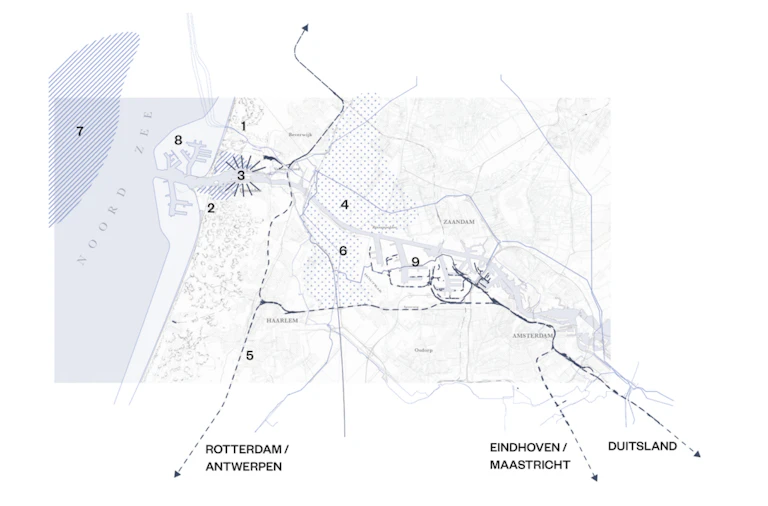
1. Identifying certainties for the future
The greatest certainty for the future is climate change. Salinization of water and soil puts pressure on freshwater availability. This primarily affects agricultural production. The decreasing navigability of rivers due to the disappearance of glacier meltwater and more erratic precipitation patterns is a major problem for the transport of steel (products) by water. Additionally, there is an increasing flood risk due to rising sea levels.
2. Create flexibility now
Prepare for declining navigability by phasing out companies dependent on sea connections in the North Sea Canal Area. At the same time, the frequency of opening the Sea Lock must be reduced as much as possible. Developing new or strengthening existing hinterland connections, including a multimodal transshipment point, makes the North Sea Canal Area less dependent on water transport.
3. Strategically utilize space in the future
Utilize the scarce space for the lock only for programs that require a direct sea connection. Use the sustainability upgrade of the blast furnaces to free up space for the lock.
 Ministery of Food